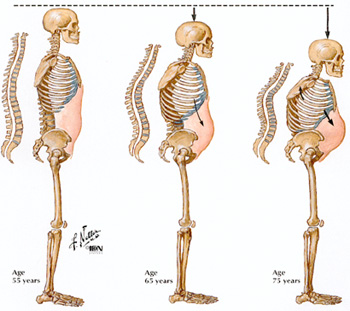
 Salt, soda and caffeine and even whole grains are on the Do Not Overdo list for osteoporosis, while protein, veggies, calcium, vitamin D and exercise are essential to ward off weak bones.
Calcium is required for muscle contraction, blood vessel expansion and contraction, secretion of hormones and enzymes, and transmitting impulses throughout the nervous system
- Adults from 19 up to age 50 require 1,000 milligrams of calcium daily, while older (50+) and younger (9-18) people need 1,200 or 1300 milligrams of daily calcium, respectively.
- Adults and children over 4 need 400 International Units (IU) of vitamin D a day. Daily value increases to 600 IU of vitamin D a day after age 70.
Salt can pose a great obstacle to a sturdy skeleton. Research has found that postmenopausal women with a high-salt diet lose more bone minerals than other women of the same age.
Soda drinks may contain phosphoric acid, which can increase calcium excretion in your urine. And nearly all soft drinks lack calcium. That combination spells trouble for women at risk of osteoporosis.
Researchers from the Centre for Nutrition and Food Safety, UK, found a positive link between vegetable and fruit consumption and bone health.
Though obesity is associated with a large number of health problems, osteoporosis isn't one of them. In fact, a number of research studies have found that being overweight has a protective effect against osteoporosis.
Another study published in the American Journal of Clinical Nutrition found that a "higher intake of protein was associated with higher bone mineral density" in a study group comprised of postmenopausal elderly women.
Whole grains may not be a healthy food for everyone, especially people at risk for low bone density health issues. Research studies have shown that the phytates in unleavened, high fiber, whole grain foods may actually contribute to deficiencies of minerals such as iron, zinc and calcium.
According to scientists at the Medical College of Georgia in Augusta (their findings were just reported at the Experimental Biology conference - April 24-April 29, 2010, Anaheim, California), exercise helps to forestall osteoporosis in women.The team found that study participants who exercised more than 180 minutes a week retained greater bone density.
"Our work provides more evidence that physical activity is important for maintaining bone density. It's a case of 'use it or lose it,'" principal investigator Dr. Joseph Cannon says in a statement.
Cannon and colleagues measured 36 women between the ages of 20 and 50 for bone mineral density and levels of follicle-stimulating hormone -- an ovary regulator released by the pituitary gland.
They correlated higher levels of the hormone with lower bone mineral density and found the hormone combined with white blood cells stimulated production of interleukin-1, which also correlated with lower bone mineral density.

No comments:
Post a Comment