Saturday, July 17, 2010

Honey!

People have been using honey since ancient times. Recent research by Dr. Paulus Kwakman identified the key elements which give honey its antibacterial activity.

Bacteria are becoming resistant to drugs faster than we’re developing them. Honey might help because it works when other drugs don’t. Studies show it has good activity in vitro against antibiotic-resistant bacteria. An older study reports successful treatment of a chronic wound infections not responding to normal medicine.

So how does it work? It’s a combination of five factors.

1. Hydrogen peroxide, a kind of bleach. The honey enzyme called glucose oxidase makes hydrogen peroxide when honey is diluted with water. We clean toilets with bleach, and it’s pretty good at killing bacteria.

2. Sugar. Honey has so much sugar there’s hardly any water for bacteria to grow in.

3. Methylglyoxal (MGO), an antibacterial compound found in New Zealand Manuka honey a couple of years ago. It’s also found in medical grade honey which is made in controlled greenhouses, albeit in smaller amounts.

4. Bee defensin 1, a protein found in royal jelly (special food for queen bee larva.) This report is the first time bee defensin 1 has been identified in honey, and it works as an antibiotic.

5. Acid. Diluted honey has a pH of around 3.5, the acidic environment slows down bacterial growth.

These five things work together to provide a broad spectrum activity against bacteria. For example, S. aureus is vulnerable hydrogen peroxide, while B. subtillis is challenged only if MGO and bee defensin 1 are working simultaneously. Honey has the right mix for maximum destruction.

So that’s how bees keep their honey fresh and unspoiled by bacterial growth. Perhaps with this information we’ll create enhanced honey to guard against infection, improving on nature like we did with penicillin. Until then, I know what I’m having on my toast.

A Schooner of Science could be named Australia’s best science blog. If you enjoyed reading, please vote for me.

ResearchBlogging.orgKwakman, P., te Velde, A., de Boer, L., Speijer, D., Vandenbroucke-Grauls, C., & Zaat, S. (2010). How honey kills bacteria The FASEB Journal, 24 (7), 2576-2582 DOI: 10.1096/fj.09-150789

ShareThis


Honey has been known since ancient times to have antibacterial activity. The reason why is a combination of five factors: hydrogen peroxide, sugar, methylglyoxal, bee defensin 1, and acid.

Enhanced by Zemanta

Thursday, June 10, 2010

anti-Alzheimer's diet

LégumesImage via Wikipedia

According to Altzeimer's association, a study of elderly women showed that those who ate the most green, leafy and cruciferous vegetables . . . were one to two years younger in mental function than women who ate few of these vegetables.

Domenico Pratico, an associate professor of pharmacology in Temple's School of Medicine, had previously found a diet rich in methionine -- an amino acid typically found in red meat, fish, beans, eggs, garlic, lentils, onions, yogurt and seeds -- could increase the risk of developing Alzheimer's Disease.

Another study by Domenico Pratico demonstrated that amino-heavy methionine diet is even worse - resulting in less amyloid plaques in the brain.

Other advices include de-fating your diet and staying green and fresh

Enhanced by Zemanta

Wednesday, June 2, 2010

What you did not know about Urine

Human excretion is the body system that separates and gives of the wastes from the body, usually as urine or sweat.

Liver will change the ammonia a poisonous product of protein digestion into the urine

Urine is 95% water
It has a pinch of dissolved waste from the blood stream, a dash of uric acid and a sprinkle Creatine.

Romans used Urine in Toothpaste as a teeth-whitener

If Urine smells of Ammonia, you may be dehydrated.
If smell is musty, you may have liver disease
Foul smell may indicate bladder infection

the average adult bladder can hold two cups of urine for two to five hours


Reblog this post [with Zemanta]

Saturday, May 8, 2010

On Health and Fitness

Diet is 85% of where results come from…..for muscle and fat loss. Many don’t focus here enough, says Mike O'Donnell, a personal trainer, professional health and fitness coach.
His other tips for personal working out include:
•Pushups are the best upper body workout,but working out too much doesn’t lead to good results
•It’s never too late to build muscle, but you need to lift heavy enough weights.
•Dependence on gyms to workout may be keeping people fat, people do not realize that just walking does the street could be effective. The fittest people keep active doing what they enjoy.
•Never listen to any advertising telling you what is healthy….as they are just trying to sell you something

These advices could apply only to Mike O'Donnell though:
•Supplements were are waste of a lot of money for me. Same about Whey protein
•The best performance enhancing thing I know of….is a cup of coffee 30min before a workout/playing sports.
•Many brain functions may be vastly improved with a diet of no sugar/higher fats (esp DHA from fish/fish oil)
•80/20 rule is so true…..80% of your results come from just 20% of the exercises, 20% of the food in supermarkets, and spending 20% of your time working out.


And finally, this applies to all of us:

•There is no one right way for anything…..as 20 different ways can get you results…
•There is nothing new in health and fitness…..just ideas that resurface that are long forgotten

Friday, May 7, 2010

Blogging from My Calendar

Was playing with google tools recently and found the blogger gadget. It allows to quickly write messages and post them from my calendar. Links can be inserted by typing html code, like this - Here is the link to the blogger gadget.
The good news is that all you type is saved in the draft mode, so you can hone it afterwards.

Thursday, April 29, 2010

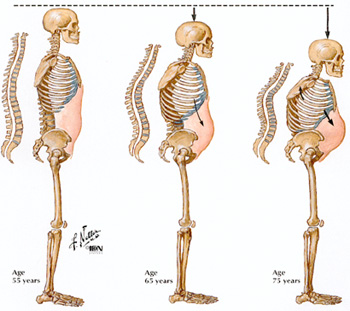
Osteoporosis: diet and exercise

Salt, soda and caffeine and even whole grains are on the Do Not Overdo list for osteoporosis, while protein, veggies, calcium, vitamin D and exercise are essential to ward off weak bones.

Calcium is required for muscle contraction, blood vessel expansion and contraction, secretion of hormones and enzymes, and transmitting impulses throughout the nervous system

  • Adults from 19 up to age 50 require 1,000 milligrams of calcium daily, while older (50+) and younger (9-18) people need 1,200 or 1300 milligrams of daily calcium, respectively.
  • Adults and children over 4 need 400 International Units (IU) of vitamin D a day. Daily value increases to 600 IU of vitamin D a day after age 70.

Salt can pose a great obstacle to a sturdy skeleton. Research has found that postmenopausal women with a high-salt diet lose more bone minerals than other women of the same age.

Soda drinks may contain phosphoric acid, which can increase calcium excretion in your urine. And nearly all soft drinks lack calcium. That combination spells trouble for women at risk of osteoporosis.

Researchers from the Centre for Nutrition and Food Safety, UK, found a positive link between vegetable and fruit consumption and bone health.

Though obesity is associated with a large number of health problems, osteoporosis isn't one of them. In fact, a number of research studies have found that being overweight has a protective effect against osteoporosis.

Another study published in the American Journal of Clinical Nutrition found that a "higher intake of protein was associated with higher bone mineral density" in a study group comprised of postmenopausal elderly women.

Whole grains may not be a healthy food for everyone, especially people at risk for low bone density health issues. Research studies have shown that the phytates in unleavened, high fiber, whole grain foods may actually contribute to deficiencies of minerals such as iron, zinc and calcium.

According to scientists at the Medical College of Georgia in Augusta (their findings were just reported at the Experimental Biology conference - April 24-April 29, 2010, Anaheim, California), exercise helps to forestall osteoporosis in women.

The team found that study participants who exercised more than 180 minutes a week retained greater bone density.

"Our work provides more evidence that physical activity is important for maintaining bone density. It's a case of 'use it or lose it,'" principal investigator Dr. Joseph Cannon says in a statement.

Cannon and colleagues measured 36 women between the ages of 20 and 50 for bone mineral density and levels of follicle-stimulating hormone -- an ovary regulator released by the pituitary gland.

They correlated higher levels of the hormone with lower bone mineral density and found the hormone combined with white blood cells stimulated production of interleukin-1, which also correlated with lower bone mineral density.


Friday, April 16, 2010

Rating Food and Drink products


There are many systems and ways to rate food. Yale's Dr. David L. Katz, for example, uses a rating system called the Overall Nutritional Quality Index (ONQI). The Katz system evaluates all foods in a grocery store on a 1-to-100 scale, with 100 being the healthiest.

Nutritiondata developed their own rating system, including the Caloric Ratio Pyramid™, estimated Glycemic Load™, and inflammation Factor Rating.

Other systems are based on collective intelligence - like hopchart for rating beer.

The founder got into craft beer a few years ago and decided to make a system to track wh

A bottle and frosty mug of Magic Hat No. 9 bee...Image via Wikipedia

at he drank and give it a rating.

There are plenty of beer rating sites on the internet (Beer Advocate, RateBeer, etc) but they allow only one rating of a given beer. According to Andrew, if a Beer Advocate rating is like a blog, then a HopChart rating is like a tweet. Map-like features are planned to be implemented soon. And if you are feeling adventurous and want to enjoy a different night out, try localvortex - a geo-locator of nearby bars.

Another example of an application allowing food ratings is Food Prints
developed by Sargis Dallakyan on Jan 10, 2009 - with good ratings from the users:
This app allows you to search and browse nutrition facts from food labels. Users can change serving size and view images generated by Google search. The back-end is powered by Google App Engine and Django. The front-end is using Yahoo! User Interface Library, Google AJAX Search and Adobe Flex.

More general applications like Eat.ly or GoodGuide, allow to rate foods too, among other consumer products.
Reblog this post [with Zemanta]

Sunday, March 21, 2010

Twitter Diet Sentiments


People use Twitter to tell about their headaches, weight trends, Bed Activities, bowel movements and more. And, of course, they twit about diet.
Here is a quick analysis of sentiments expressed about dieting on twitter - in short: we are mostly neutral when thinking about diet food, negative about life style changes, choices and symptoms, often negative about weight - but emotions concerning the latter fluctuate a lot. People are positive about news though, so may this blog improve your mood as well.


Reblog this post [with Zemanta]

Sunday, February 21, 2010

Bathroom, Smelling, Scratching and Other Health Tips


Hong Kong combination shower and bathroomImage via Wikipedia

Wash your hands , your mother used to tell you. It is not only about preventing foodborne illnesses and peptic ulcers. In winter time, this habit can prevent a nasty flu.
Here are more bathroom hygiene or other seemingly strange but true tips that could help you to be happy and healthy.


Reblog this post [with Zemanta]

Friday, February 19, 2010

How to Lose Your Bad Microbes


There is a lot of information on the web about losing weight, some information on anti-candida diets and almost nothing on how to get rid of other unwanted opportunistic microbes.


Let's review some of the existing antimicrobial diets:

The most popular advice is - get more good bacteria, it will fight your bad bugs - eat your yogurt and miso soup or take probiotics.

More elaborated advice disliked by the readers suggest
that no more than one third of your daily calories should be coming from each of the following - carbohydrates, protein and fats

Yeast loves sugar and simple carbohydrates - one of representative diets focuses on eliminating simple carbs from your food for at least 3 month. Also suggested is to avoid cheeses, alcohol, chocolate, dried fruits, fresh fruits, fermented foods, mushrooms, vinegar, glutenous foods (wheat, rye, oats, barley), all sugars, honeys and syrups (that includes any ‘ose’, like lactose, sucrose etc), and foods that contain yeast or mold (breads, muffins, cakes, baked goods, cheese, dried fruits, melons, peanuts – although nutritional and brewer’s yeasts are not harmful, as they do not colonize in the intestines). Good foods include the non-excluded veggies, meats, nuts and seeds.

There is no universal anti-candida diet, all alternative and non-alternative medicine practitioners have their own views and beliefs on what can or can not be excluded.

Specific Carbohydrate Diet developed over 60 years ago suggests to exclude complex carbs instead of simple carbs. It is not a low carbohydrate diet, see example recipes. The allowed carbohydrates are monosaccharides such as glucose and fructose. Complex carbohydrates such as starch and glycogen, chitin, lactose, fructo-oligosaccharides (FOS), inulin and galactooligosaccharides (GOS) are not allowed. The diet was thought to work by starving out harmful bacteria and restoring the normal balance.

Another regimen promoted as anti-candida diet is Raw foodism. It promotes consumption of un-cooked, unprocessed and organic foods. On the contrary, anti-bacterial diet (protecting from introducing new bacteria in the system) means you are forbidden to eat or drink anything that was not pasteurized, and thoroughly cooked. Other anti-bacterial recommendations include no or low starch as recommended by Dr. Alan Ebringer.


Check out this SlideShare Presentation for more on microbes:

Reblog this post [with Zemanta]

Tuesday, February 16, 2010

Anti-inflammatory diet

Olive oil from Imperia in Liguria, Italy.Image via Wikipedia

Humans evolved consuming food that is completely different in composition and nutrient ratios from modern diet. Many of the foods and beverages that have become staples in our Western diets are not only missing in healthy nutrients, they irritate and damage the intestinal lining.

Among ancient humans, hunter-gatherers, there was a huge range of diets - from almost all meat to almost all plant-based. Yet most of mankind for most of human history has lived on vegetarian or near-vegetarian diets.

Among the many health problems resulting from this mismatch between our genetically determined nutritional requirements and our current diet, some might be a consequence in part of the deficiency of potassium alkali salts (K-base), which are amply present in the plant foods that our ancestors ate in abundance, and the exchange of those salts for sodium chloride (NaCl), Deficiency of K-base in the diet increases the net systemic acid load imposed by the diet. Contemporary net acid-producing diets do indeed characteristically produce a low-grade systemic metabolic acidosis in otherwise healthy adult subjects, and the degree of acidosis increases with age.

Hip fracture incidence in older women, for example, correlates with animal protein intake and acidosis is unacceptable from an evolutionarily perspective.

Today, in Western diets, the ratio of n-6 to n-3 essential fatty acids ranges from ~20-30:1 instead of the traditional range of 1-2:1. Over the past 100 to 150 years there has been an enormous increase in the consumption of n-6 fatty acids due to increased intake of vegetable oils from corn, sunflower seeds, safflower seeds, cottonseed and soybeans.


Beneficial effects of n-3 fatty acids have been shown in the secondary prevention of coronary heart disease, hypertension, type 2 diabetes, and, in some patients with renal disease, rheumatoid arthritis, ulcerative colitis, Crohn disease, and chronic obstructive pulmonary disease (Simopoulos, 1999).

Not only refined but also whole grains and rice contain n-6 fatty acids and no n-3 fatty acids. They also contain sugar-binding proteins lectins that may be blocking nutrient absorption and may be responsible for “leaky gut syndrome” -
the inability of the intestinal wall to keep out large, unwanted molecules, such as proteins, due to the altered permeability of intestinal wall. The body misinterprets these large molecules as a foreign invader and begins to produce antibodies to attack them. In turn, this creates a process where one’s body recognizes certain foods and its own molecules as harmful, causing an auto-immune disease when the body attacks itself. As a result bacteria and toxins get transported into bloodstream weakening the body. Among other potential causes of this syndrome are high alcohol and caffeine intake, drugs like ibuprofen and antacids, gluten, casein and other proteins.

Some grains also contain phytates that block absorption of Mg and other minerals.


Check out this SlideShare Presentation:
Reblog this post [with Zemanta]

Wednesday, January 20, 2010

Portions and Servings

Winter. Famine. Indian Tribe's food supplies are increasingly scarce, so serving sizes are really small.
One day, the Indian chief calls together the tribe and announces that he has some good news and some bad news to give them.
Give us the bad news first, asks the tribe.
No more food is left, says the chief. All we have is buffalo dung.
What's the good news?
No more rationing. We are increasing serving sizes.


Seriously, now... What counts as a serving?

Lynn Grieger from iVillage suggests this quiz to assess how portion savvy you are. We added a few more questions to this quiz.

Photo by R L Sheehan of commercially available...Image via Wikipedia

1. A serving of fruit juice is:
a) 4 fluid ounces
b) 6 fluid ounces


c) 1 cup

2. One bakery-shop bagel is how many servings of grains:
a) 4
b) 6
c) 2

3. What is the correct serving size of cooked pasta:
a) 1/2 cup
b) 1 cup
c) 2 cups

4. The serving size of raw salad greens is:
a) 1/2 cup
b) 1 cup
c) 2 cups

5. How much cheddar cheese is one serving?
a) 1 ounce
b) 1 1/2 ounces
c) 2 ounces

6. One cup of tuna is equal to how many ounces of meat?
a) 4
b) 2
c) 3

7. One egg is equal to how many ounces of meat?
a) 3
b) 2
c) 1

8. A serving of most salad dressings is:
a) 2 tablespoons
b) 2 teaspoons
c) 1 tablespoon

9. A small baked potato should weigh:
a) 6 ounces
b) 3 ounces
c) 2 ounces

10. One serving of ice cream is:
a) 1/2 cup
b) 1 cup
c) the entire carton

11. What is a serving size of fruits or vegetables?
a) 1/2 cup
b) 1 large fruit
c) the entire carton

12. Is a serving size listed on the label same as serving size in food pyramid?
a) Yes
b) Never the same
c) Not always


Answer to 1: According to the food pyramid, a serving is 6 fluid ounces, or 3/4 cup. If you're used to Weight Watchers or other exchange-type programs, 1/2 cup is a serving. Or you could read the label, but remember that individual-size bottles of fruit juices and drinks such as Snapple have grown over the past few years; one "individual" bottle usually serves 2 1/2.

Answer to 2: The old standard "one-half bagel equals one serving of grain, or one slice of bread" doesn't apply to the giant-size bagels we eat with abandon. Most bagels are now five to six servings of grains. Be honest: Would you eat three sandwiches for lunch? That's what you're doing when you have a bagel sandwich.

Answer to 3: One-half cup, or the amount you hold in one cupped hand, is one serving of pasta. Since we should aim for six or more servings of grains each day, it's okay to eat 1 cup of pasta (or two servings) at a meal. But remember, if you had a bagel for lunch, you've met your grain servings for the day with just 1/2 cup of pasta.

Answer to 4: One cup, or the amount you hold in two cupped hands.

Answer to 5: 1 ounce, or about 1 1/2 thumbs' worth, is one serving of cheese.

Answer to 6: One cup of tuna is equal to 4 ounces of meat, or slightly larger than the palm of a small woman's hand.

Answer to 7: Each egg is equal to one ounce of meat; if egg substitute is your preference, 1/4 cup is equal to one egg.

Answer to 8: Two tablespoons, or the size of a small thumb.

Answer to 9: Three ounces is considered a small baked potato, about 1/4 the size of the whoppers we're served at many restaurants.

Answer to 10: Most of us aren't satisfied until we've eaten the entire carton of ice cream, but that doesn't mean it's a "serving." One-half cup, or one ice-cream scoop, is considered a serving. If 1/2 cup of ice cream has 140 calories, then a typical bowl containing two cups of ice cream has 560 calories. How's that for a bedtime snack?

Answer to 11: For fruit and vegetables, think small, says Lynn Grieger. Instead of giant-size oranges or apples, look for smaller pieces of fruit. Here are approximate serving sizes:

Fruits

  • one banana
  • six strawberries
  • two plums
  • fifteen grapes
  • one apple
  • one peach
  • one half cup of orange or other fruit juice
Vegetables
  • five broccoli florets
  • ten baby carrots
  • one roma tomato
  • 3/4 cup tomato juice
  • half of a baked sweet potato
  • one ear of corn
  • four slices of an onion

Answer to 12: Serving sizes on the Nutrition Facts Label of packaged fruits and vegetables are not always the same size as the one-half cup serving size that the USDA has set for the food pyramid, says from about.com: for example, some frozen vegetable blends may list the serving size as 3/4 cup, which would meet one and one half of your vegetable need for the day. One serving of a fruit or vegetable juice is four ounces. V8 Fusion claims to meet one serving of fruit and one serving of vegetables in one eight ounce glass. A large glass may hold about 12 ounces, which would give you three servings of fruits and vegetables. Check the label for specific serving size information, but read beyond food labels and don't always trust them, says Aurametrix. While it is very important to read all information given on the packages and be able to interpret the labels, sometimes it is more important to trust your instincts.

Reblog this post [with Zemanta]

Friday, January 15, 2010

Healthy Foods Can Be Tasty


The six divisions of the pyramidImage via Wikipedia

What could make us eat healthy? Better self-evaluation, self-awareness and better taste.

Most marketed foods are least healthy, and so are meals served in restaurants and sold as packaged foods. Do we really like all this salt and fat or are we forced to like it?

Although the majority of Americans acknowledges importance of healthy diets, this does not always translate into behavior change. Taste, preferences acquired during childhood and adolescence, friends & family, and media have more influence on what we eat. In 1997, for example, food manufacturers spent 44.4% of their advertising budget on prepared convenience foods, confectionery and snacks, and bakery goods compared with only 2.2% on fruits, vegetables, grains and beans. Besides, busy people prefer prepackaged foods and restaurant meals, which are not the healthiest choices either.Aurametrix, What could make us eat healthy?, Aug 2009


Reblog this post [with Zemanta]

Friday, January 8, 2010

Why Fiber is Good for You

Wheat.Image via Wikipedia

Dietary Fiber - a non-nutritive bioactive food component, has been a topic of considerable interest among nutritionists and clinicians for the past 50 years.

Fiber alters the nature of the contents of the gastrointestinal tract and modifies the absorption of other nutrients and chemicals. It helps to cleanse your body and get glowing skin by removing unwanted toxins.

Intake of fiber from grains and whole-grain foods was found to protect from colorectal cancer and other lower gastrointestinal cancers. Dietary fiber can also play a role in preventing breast cancer through nonestrogen pathways among postmenopausal women.

Recently published ConsumerReports explain the health benefits of adding more fiber to the diet
An article in Washington Post lists the four ways of why fiber is so good for your health.

-- It may prevent the absorption of fat, thus helping to lower LDL (bad) cholesterol.

-- It slows the absorption of sugar, which might help control Type 2 diabetes.

-- It speeds waste through your gut, which helps keep you regular.

-- It fills you up, which can help you limit how much you eat.

Of course, it is not only about fiber, but other nutrients that fiber-rich foods contain - a more holistic approach can better explain the benefits of fiber. So do not look for pills but for foods labeled as "good sources" of fiber (~3g/serving), choose whole grains, munch on raw carrots or celery, eat apple, banana, carrot or other fruits or vegetables, add beans or lentils to soups and salads. Check also 8 ways to eat more fiber and more on science behind it.

Be careful with fiber if you have irritable bowel though - but this is a different story.


Reblog this post [with Zemanta]